

Canada’s federal government is facing fresh scrutiny over its handling of air passenger rights after internal records suggested ministers and senior officials delayed and undermined a plan that would have shifted the cost of processing passenger complaints from taxpayers to airlines.
The proposal, developed by the Canadian Transportation Agency (CTA) following a 2023 directive from Parliament, would have required carriers to pay a fixed fee for each eligible complaint resolved, effectively funding a national reporting and redress system for disgruntled travelers.
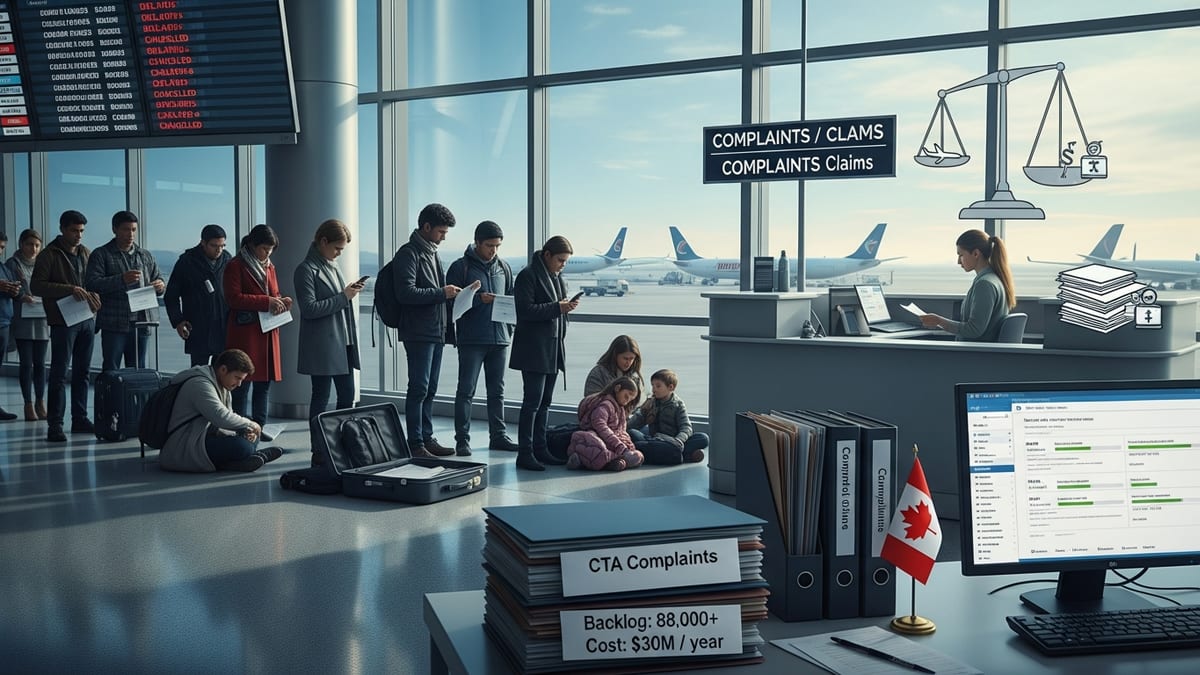
Instead, nearly 100,000 passengers remain stuck in a growing backlog and taxpayers continue to shoulder an annual bill of about 30 million Canadian dollars for a system critics say is buckling under its own weight.
At the heart of the uproar is a letter sent by then-transport minister Anita Anand, who assumed the portfolio after the initial design of the cost-recovery plan. In that letter, Anand asked the CTA to delay any decision on imposing the airline fee until she had been formally consulted, arguing that she had not been adequately brought into the loop on the details of the proposal. The agency had previously briefed her predecessor, Pablo Rodriguez, during the plan’s development, but Anand insisted that was not sufficient.
“Notification to the previous minister is insufficient,” Anand wrote, according to excerpts reported by Canadian outlets. She requested that the CTA “refrain from implementing any decision on the fee” until she could review and provide input, effectively putting the brakes on a process that had been advancing in line with Parliament’s instructions. For a regulator already struggling with skyrocketing complaint volumes, the pause added further delay to a reform intended to stabilize its resources and clear the queue.
Additional emails from senior Transport Canada officials amplified the pushback. Officials raised concerns about the potential impact of the 790 dollar fee and its uniform application across all eligible complaints. Industry stakeholders had already warned that such a structure could be punitive and might encourage what airline executives described as frivolous or opportunistic claims. As these concerns filtered through the department, the CTA found itself navigating not only external lobbying but also internal pressure that appeared to conflict with its statutory duty to implement Parliament’s will.